
1. Introduction: The Engineering Evolution of Butterfly Vallets
Butterfly valves have become indispensable components in modern fluid control systems, serving critical roles in industries ranging from water treatment and energy to chemical processing and pharmaceuticals. Their compact design, rapid quarter-turn operation, and cost-effectiveness make them a preferred choice for applications requiring efficient flow regulation. Unlike gate or globe valves, which involve complex multi-turn mechanisms, butterfly valves leverage a simple rotational motion to control fluid passage, significantly reducing operational complexity and space requirements .
The core functionality of these devices hinges on a rotating disc (the “butterfly”) mounted perpendicularly within a pipeline. When open, the disc aligns with the flow direction, minimizing pressure drop. When closed, it rotates 90 degrees to block the flow entirely, aided by a sealing interface between the disc edge and the valve body . This elegant mechanism, however, relies on precision engineering, material science, and proper installation to ensure leak-free performance under diverse operating environments.
2. Key Components and Their Roles in Valve Performance
A butterfly valve’s efficiency stems from the synergy of its core components:
Valve Body: Typically constructed from cast iron, stainless steel, or corrosion-resistant alloys, the body houses internal parts and connects to pipeline flanges. Designs include wafer-style(lightweight, cost-effective) and lug-style(suitable for dead-end service) .
Disc: The primary flow-control element, often made from metals or coated composites. Its geometry—whether concentric, single-offset, double-offset, or triple-offset—directly impacts sealing efficiency and torque requirements .
Stem: Connects the disc to the actuator. Critical for torque transmission, it must resist torsional stress and corrosion. In high-performance valves, stems are often engineered from hardened alloys .
Seat: The sealing surface ensuring leak-tight closure. Material selection ranges from elastomers (EPDM, NBR) for flexibility to PTFE for chemical resistance or metal alloys for extreme temperatures .
Actuator: Manual (lever/gear), pneumatic, electric, or hydraulic systems that enable valve operation. Proper actuator sizing ensures sufficient torque for sealing without damaging components .
3. Sealing Technologies: From Soft Seals to Metal-to-Metal Solutions
Sealing performance dictates a butterfly valve’s reliability. Two primary sealing paradigms dominate the industry:
3.1 Soft-Seated Seals
Materials: EPDM (water/steam), NBR (oils/fuels), PTFE (chemicals/high-purity), FKM (high-temperature resistance) .
Advantages: Bubble-tight shutoff, low actuation torque, and excellent resilience in low-to-medium pressure applications (< PN40) .
Limitations: Temperature constraints (typically -40°C to 200°C) and susceptibility to abrasion in particulate-laden media .
3.2 Metal-Seated Seals
Designs: Double/triple-offset configurations eliminate sliding friction, enabling metal-to-metal sealing without wear .
Advantages: Suitable for extreme conditions—temperatures up to 650°C, pressures exceeding PN320, and abrasive environments like coal slurry pipelines .
Applications: Oil and gas pipelines, power generation, and chemical processing where fire safety certifications (API 607) are mandatory .
3.3 Eccentric Innovations
Triple-Offset Design: Incorporating a conical sealing surface with three geometric offsets, this technology achieves zero leakage per API 598 Class VI standards while reducing operating torque by 30% compared to concentric designs .
4. Material Selection Guide: Matching Components to Operating Conditions
Choosing appropriate materials is critical for longevity and safety:
Water/Wastewater: EPDM seats and stainless steel bodies resist corrosion and ozone degradation .
Oil and Gas: FKM seals handle hydrocarbons, while Inconel-coated discs withstand erosion in refinery applications .
Chemical Processing: PTFE-lined seats offer near-universal chemical inertness .
High-Temperature Steam: Metal seals (e.g., stainless steel with tungsten carbide overlay) maintain integrity at 400°C+ .
Material compatibility charts and standards (e.g., API 609, ISO 5208) help engineers avoid premature failure due to chemical attack or thermal degradation .
5. Installation and Maintenance: Ensuring Long-Term Reliability
5.1 Installation Best Practices
Alignment: Misalignment with pipe flanges induces stress, leading to seal distortion. Use precision gaskets and evenly torqued bolts .
Actuator Calibration: Under-torquing causes leaks; over-torquing accelerates seat wear. Employ torque-limiting actuators for precision .
Pressure Testing: Post-installation hydrostatic/pneumatic tests verify seal integrity under operational conditions .
5.2 Maintenance Protocols
Routine Inspections: Check for stem leakage, seal wear, and disc corrosion. For high-cycle applications, inspect every 2,500–5,000 cycles .
Seat Replacement: Soft seats are replaceable; metal seats may require specialized machining. Always clean sealing surfaces during maintenance .
Predictive Technologies: IoT-enabled sensors monitor parameters like seat stress and torque, enabling condition-based maintenance .
6. Comparative Analysis: When to Choose Butterfly Valves Over Alternatives
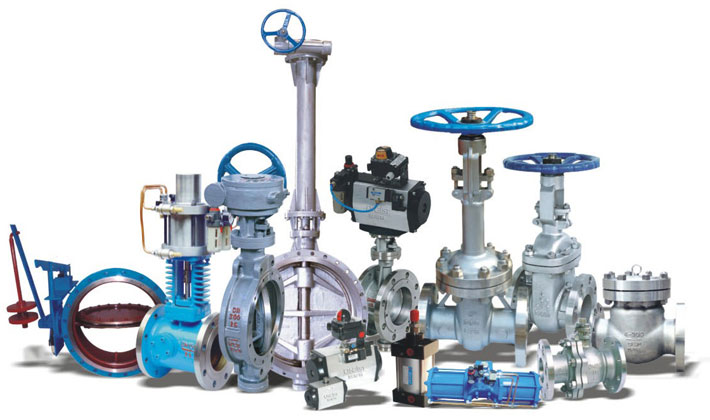
Butterfly valves excel in scenarios where space, weight, and cost are constraints. However, understanding their limitations relative to other valve types is crucial:
| Valve Type | Best For | Limitations |
| Butterfly Valve | Large diameters, low-to-medium pressure, quick operation | Limited throttling precision, disc obstructs flow |
| Ball Valve | Tight shutoff, high pressure | Larger envelope, higher cost |
| Gate Valve | Full-bore flow, infrequent operation | Slow actuation, prone to seat wear |
| Globe Valve | Precision throttling | High pressure drop, complex maintenance |
Butterfly valves are ideal for water distribution, HVAC, and chemical transfer lines, whereas ball or gate valves may be preferable for high-pressure gas or precise throttling .
7. Future Trends: Smart Valves and Sustainable Materials
Digitalization: IoT-integrated valves provide real-time data on performance, enabling predictive maintenance and reducing downtime by up to 40% .
Advanced Materials: Graphene-enhanced seals and nano-coatings promise extended service life in abrasive media .
Sustainability: Bio-based elastomers (e.g., sugarcane-derived EPDM) and energy-efficient designs (e.g., low-torque triple-offset valves) align with circular economy goals .
Conclusion
Butterfly valves represent a blend of simplicity and sophistication, offering reliable performance across diverse industries. Their evolution—from basic concentric designs to high-performance triple-offset configurations—has expanded their applicability to extreme conditions while maintaining cost and space advantages. By prioritizing correct material selection, precise installation, and proactive maintenance, engineers can leverage these valves to achieve optimal system efficiency, safety, and longevity.
This article is for informational purposes. Always consult technical datasheets and conduct application-specific testing.
References
STV Valves – Butterfly Valve Sealing Mechanisms
Tianjin Tanggu Shengshi Huagong Valve – Sealing Performance Assurance
Yokey Seals – Butterfly Valve Seal Technologies
Tianyu Valve – Double vs. Triple Offset Analysis
Tianyu Valve – Production Process & Key Technologies
Best Flow Valve – Component Functions & Maintenance
WEIZIDOM Group – Butterfly Valve Selection Guide
Post time: Feb-04-2026